



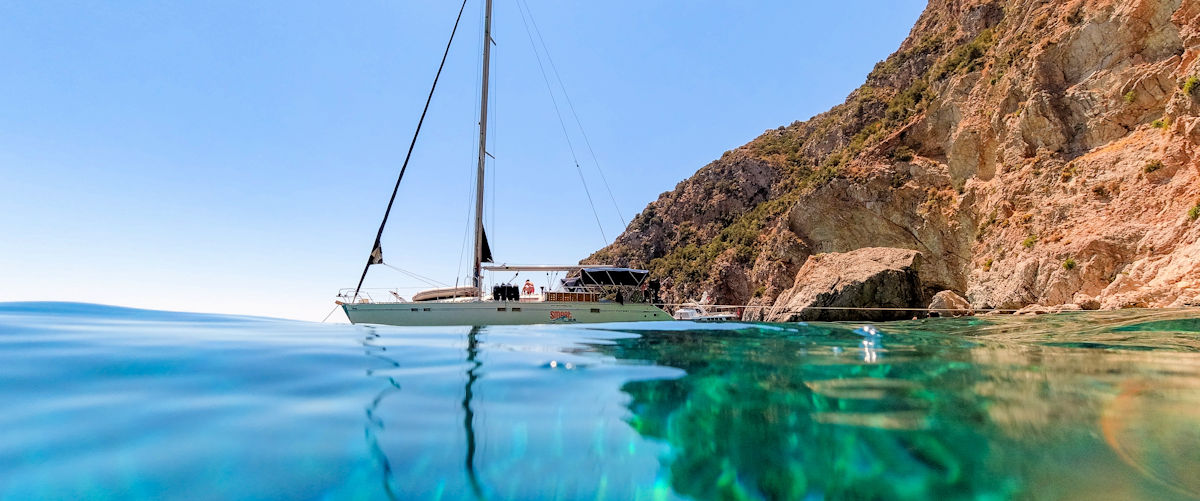
Picture the morning breeze filling the sails as your yacht leaves a quiet Aegean bay, the water so clear you can count the stones. Every sailor started where you are now, with plenty of questions.
What Is a Beginner Sailing Course?
Beginner sailing courses are structured programmes that teach complete beginners to sail a boat safely, as crew or at the helm (the steering position). Each one combines theory lessons with hands-on practice on the water. To start, choose an entry-level course such as IYT International Crew, which accepts anyone aged 16 or over with no prior sea time.
IYT stands for International Yacht Training Worldwide, a certification body whose certificates are approved by the MCA, the UK's Maritime and Coastguard Agency. Sea time is the record of days and miles you spend aboard, and you start logging it in your very first week.
Some sailing clubs run day classes, where you sail for a few hours and go home each evening. A liveaboard course puts you on a yacht for a full week instead. At Smart Sailing Academy, where Tansel is manager and chief instructor, we believe sailing for beginners should be a pleasure from the very first morning.
Why Take a Course Instead of Teaching Yourself
Books and videos teach vocabulary, but sailing is a physical skill that lives in your hands and balance. An instructor beside you corrects your grip on the helm in the moment. Safety habits learned in that first week stay with you on every boat.
Safety is the strongest reason to learn properly. Where instruction was known, the latest published US Coast Guard boating statistics (2024) show 69% of deaths were on boats whose operator had no safety instruction. In the same US Coast Guard data, where lifejacket use was known, 87% of drowning victims were not wearing one.
Read the figures carefully: these numbers cover all US recreational boating, mostly motorboats and paddlecraft, so they tell us nothing specific about sailing in the Aegean. They show a pattern and cannot prove that a course prevents deaths. Still, wearing a lifejacket and knowing the safety drill are habits worth building from day one.
With our liveaboard sailing training in the Aegean, you live on the yacht 24 hours a day. You study theory each morning and put it into practice as you sail to a new bay or island. By evening you are swimming in turquoise water at anchor, and the next lesson is waiting at breakfast.
How to Start Sailing: A Step-by-Step Path
If you are wondering how to start sailing, begin with your goal and work backwards. A day sailor on a local lake needs a different course from someone dreaming of chartering abroad, which usually requires an internationally recognised certificate.
- Decide whether you want to day sail close to home or charter yachts abroad.
- Pick the boat type and course that match your goal.
- Learn basic English nautical terms before you go, since international courses use them.
- Book early for high season, because May–October fills quickly.
- Complete the course and log your sea time.
- Move on to the next level when you feel ready.
Dinghy or Keelboat: Choosing Your Type of Course
Dinghies are small, light boats, usually steered with a tiller (a lever fixed to the rudder). They respond to every gust and shift of weight, which makes them a fine way to develop a feel for the wind.
Keelboats and cruising yachts carry a keel, a fin under the hull with ballast that helps keep the boat upright and resists sliding sideways. They are the boats used for cruising and chartering.
We train on large, modern yachts around 16 metres long, with ensuite cabins and the comforts of home. For a nervous beginner, a steady deck underfoot and a private cabin at night make learning much easier.

What You'll Learn in a Beginner Sailing Course
Whatever the school, a basic sailing course should teach you to work the boat safely as part of a crew. Our IYT International Crew course follows the IYT syllabus, taught in real sea conditions between real ports and anchorages. It covers:
- Nautical terminology
- Safety briefing
- Passage planning
- Rope work
- Basic rules of the road
- Introduction to weather
- Basic sail handling
- Handling under power
- Man overboard procedures
- Engine checks
- Deck seamanship
The rules of the road are the international collision regulations that decide which boat gives way. You practise each skill on the day you learn it, so the knot from your morning lesson is holding a mooring line by evening.
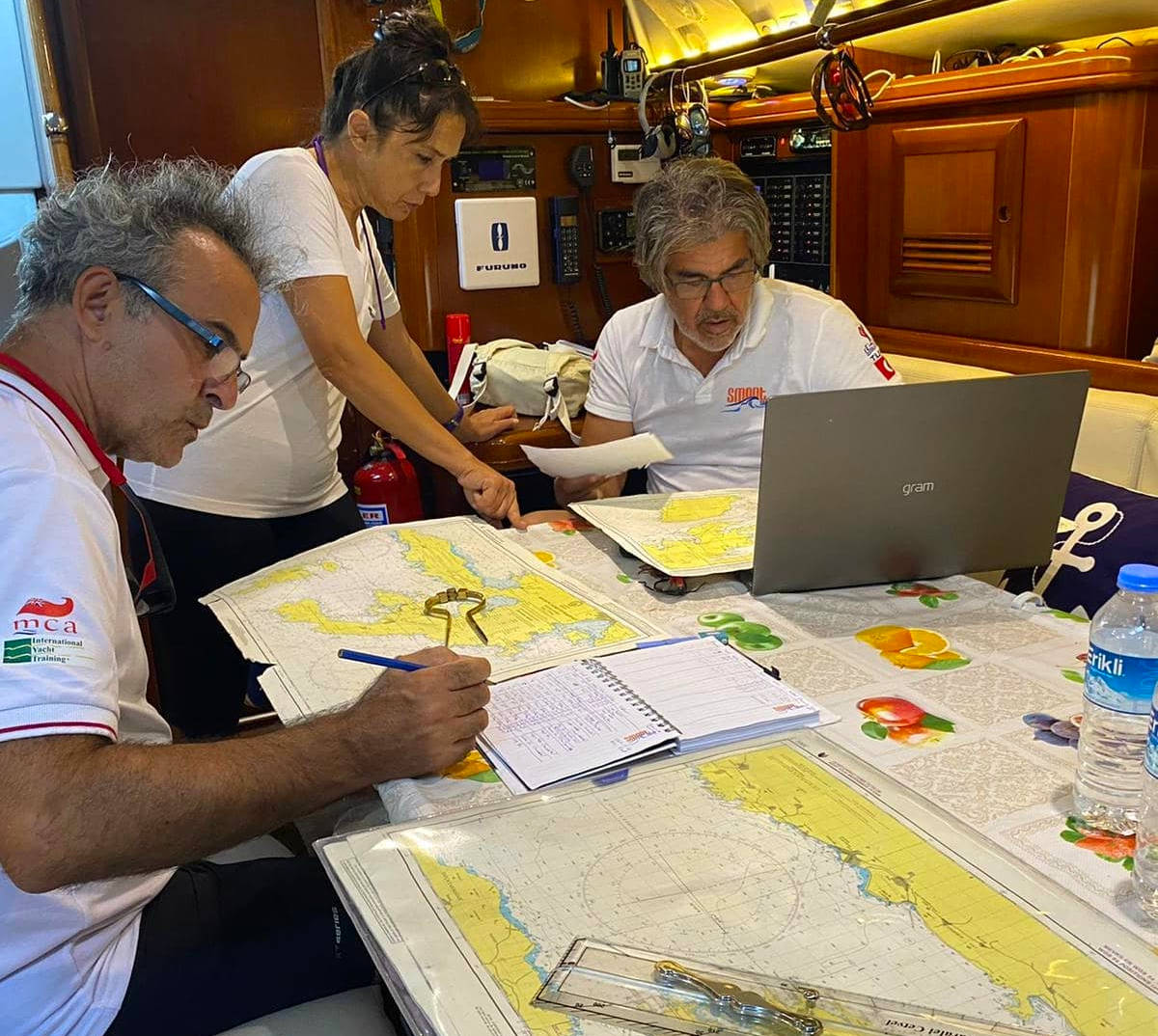
Sailing Certifications for Beginners: IYT and the ICC
You earn a sailing certificate by passing a practical and theory assessment at the end of your course. The IYT certification pathway has three one-week steps: International Crew, Flotilla Skipper and Bareboat Skipper. Each certificate is MCA-approved and recognised in over 40 countries.
Bareboat Skipper is equivalent to the RYA Day Skipper, the well-known certificate from the UK's Royal Yachting Association. If you don't pass a level, you receive the certificate for the level you did pass and can return later to continue.
The ICC, or International Certificate of Competence, is formally the International Certificate for Operators of Pleasure Craft. UNECE, the United Nations Economic Commission for Europe, sets its rules in UNECE ICC Resolution 40. Applicants must be at least 16 and pass an examination covering topics such as collision regulations and anchoring and mooring.
Once you reach Flotilla Skipper level, you can apply for an ICC through us for a 185 € fee. Each country decides whether it accepts the ICC, so check with the local authorities and your charter company before you travel. More detail is on our ICC & CEVNI page.
How to Choose the Right Beginner Sailing Course
Once you know which certificate you want, compare schools on these points:
- IYT-certified instructors and a certificate recognised abroad
- A small group, since IYT regulations allow a maximum of six people per yacht
- A well-maintained, comfortable boat with private cabins
- A location with sailing conditions you will enjoy
- Flexible schedules and departures that are guaranteed
- A clear statement of what the price includes
- Teaching in a language you understand
Our scheduled courses run even with a single reservation, so your plans never depend on other bookings. Courses run in English as standard, and Turkish or Russian teaching can be arranged in advance.
How Much Does a Beginner Sailing Course Cost?
Smart Sailing Academy runs a single, all-inclusive price policy, and the table shows 2026 summer prices per person from our current course price list.
| Course or fee | Price per person |
|---|---|
| Sailing Training | 1,200 € |
| IYT International Crew | 1,300 € |
| IYT Flotilla Skipper | 1,300 € |
| IYT Bareboat Skipper (intensive, 2 weeks) | 2,600 € |
| VHF licence | 200 € |
| ICC application fee | 185 € |
| IYT Passport | 45 € |
Course prices include accommodation on board, transit logs (the yacht's cruising paperwork), course materials and your certificate. Food and drinks are not included, and neither are transfers to the marina.
Greek Islands routes add 300 €, and a 25% non-refundable deposit secures your place. Remember that a week of training also gives you a week of accommodation at sea, with a new anchorage outside your cabin each morning.
What to Expect on Your First Day (and What to Bring)
Your week begins on Saturday, when you arrive at the yacht after 17:00 to meet your group and sort out the paperwork. On Sunday your instructor gives a full briefing, and you set sail in the afternoon.
From Sunday afternoon to Friday evening you sail and learn, anchoring in a different bay each day, and the week ends with your final exam. You leave the boat by 9:00 on Saturday, usually with a little salt still in your hair.
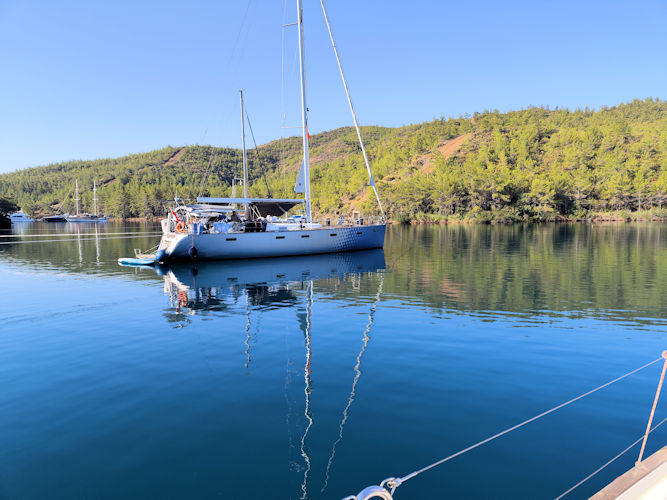
Pack light. You will need:
- A soft, foldable bag in place of a hard suitcase
- Boat shoes or soft-soled slippers, as street shoes are not allowed on deck
- A hat and sunglasses
- Sunblock
- A light extra layer
- A swimsuit and beach towel
- A waterproof bag for documents
- Your regular medicines
- Seasickness remedies
Seasickness worries many beginners. The NHS motion sickness advice suggests looking at the horizon and sitting in the middle of the boat. The NHS also notes that motion sickness patches are for adults and children over 10, so ask a pharmacist or doctor which remedy suits you.
For everything else about life aboard, read our full packing and onboard FAQ.
How Long Does It Take to Learn to Sail?
One week is enough to become a competent crew member with the International Crew certificate. Reaching Bareboat Skipper takes three one-week steps, or 14 days on the intensive course.
You can take the steps at different times, so the pace is yours. We train all year round, with winter courses in Marmaris Bay, and you can pick your dates on our live course schedule.
What Comes After Your First Sailing Course
After your first week, keep logging sea time in your IYT Passport, the record book that follows you through every level.
Your next steps are Flotilla Skipper, then the IYT Bareboat Skipper certificate. It qualifies you to command a yacht up to 24 metres in fair weather, within sight of land.
To skipper, you also need a VHF radio licence, and from Flotilla Skipper level you can apply for an ICC. Later, Yachtmaster courses take you further offshore.
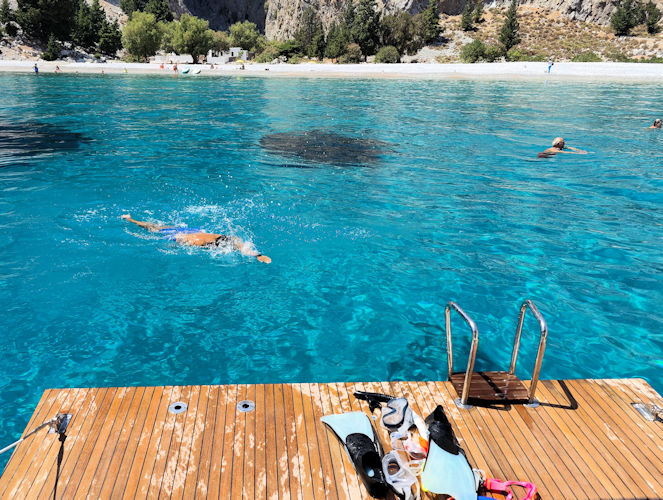
Many of our students return year after year, some for further training and some simply for another week on the water. A good number have become lifelong friends, and that is what sailing means to us: a way of life, shared one bay at a time.
Frequently Asked Questions
These short answers cover the questions newcomers ask before booking their first course.
Do I Need Any Experience Before a Beginner Sailing Course?
No, the IYT International Crew course requires no prior sea time, and you only need to be 16 or over.
How Do I Get Into Sailing With No Experience?
Start with an entry-level certified course such as IYT International Crew, then keep building sea time on further courses and charters.
Do I Get a Certificate After a Beginner Sailing Course?
Yes, if you pass the practical and theory assessment, which the majority of our students do. If you fall short of a level, you receive the certificate for the level you passed.
Can I Learn to Sail if I Get Seasick?
Yes, even seasoned sailors feel queasy at times, so bring medication or patches and use the horizon tip above. A large, stable yacht also helps.
Which Language Are Courses Taught In?
English is standard, and Turkish or Russian teaching can be arranged in advance. Whichever you choose, it helps to know basic English nautical terms.
Ready to Take Your First Course?
Choose your dates on the live schedule and start logging sea time in your very first week.