



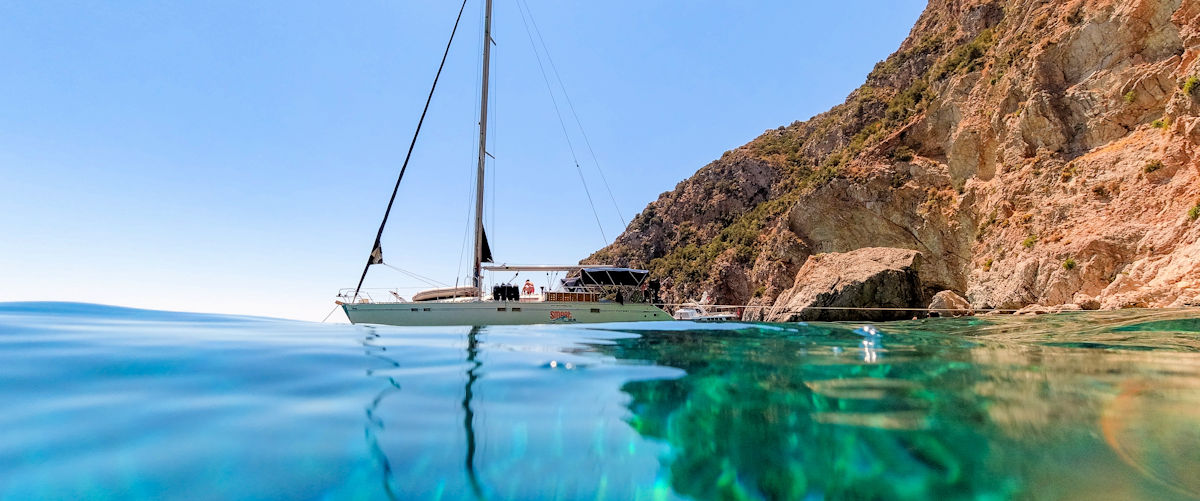
What Is the ICC Sailing Certificate?
An ICC sailing course is the training and exam that qualifies you for the International Certificate of Competence (ICC). The ICC is a certificate of competence for operating pleasure craft in inland and coastal waters. National authorities such as the RYA issue it, and so does IYT under MCA approval.
The certificate comes from UNECE Resolution No. 40, which the UNECE Working Party on Inland Water Transport adopted on 16 October 1998. Strictly speaking, the ICC is a certificate, and the "course" is the skipper training and assessment that earn it.
As an IYT instructor, I explain it to students simply: the ICC is a certificate you earn on top of a skipper qualification. You first prove you can handle a yacht, and the ICC then carries that proof into the waters that ask for it. Our page on IYT ICC and CEVNI requirements sets out the IYT route in detail.
Who Needs an ICC and Where It Is Accepted
IYT says the ICC is generally required in the inland and coastal waters of Mediterranean countries, and generally not required in Northern Europe and Scandinavia. Treat that pattern as a guide only, because each country sets its own rules.
The RYA makes this point clearly in its RYA evidence-of-competence guidance, noting that the ICC's validity is determined by the visited country. In the RYA's words, that makes it "not a truly international qualification". The same certificate can be required in one country and optional in the next.
For UK-flagged boats, the RYA Croatia advice says Croatia has formally adopted Resolution 40, so a valid ICC should be acceptable evidence of competence there. Even so, confirm with your charter company in writing before you book.
Greece has not adopted Resolution 40, yet the RYA Greece advice says an ICC valid for a UK-flagged vessel is generally acceptable and recommended. For Turkey, where we teach, the RYA evidence-of-competence table lists the ICC as "Required. ICC recommended" for UK-flagged boats arriving by water. In both countries, confirm with your charter company in writing.
The practical rule: We sail both sides of the Aegean every season, and I tell my students the same thing each time. The ICC opens the conversation with a charter company, and the company makes the final decision. A skipper certificate alongside it gives that conversation a much better start.
ICC vs IPC vs IYT Bareboat Skipper
Sailors planning a Mediterranean charter often meet these certificates together and mix them up. The table below compares issuer, basis, prerequisite and validity using what each organisation publishes.
| ICC | IPC | IYT Bareboat Skipper | |
|---|---|---|---|
| Issuer | National authorities (such as the RYA) or IYT under MCA approval | US Sailing | IYT, MCA-approved |
| Basis | UNECE Resolution 40 | US Sailing certification | IYT training and exam |
| Prerequisite | Age 16+, fitness, and an exam or acceptable qualifying certificate | US Sailing membership and Bareboat Cruising certification | Standard IYT path: International Crew, then Flotilla Skipper |
| Validity or scope | 5 years | 5 years from the date of issue | Command up to 24 m in fair weather in sight of land; qualifies you for an ICC |
The IPC comes from the American side of the Atlantic. According to the US Sailing IPC requirements, US Sailing says the certificate is good for five years from the date of issue. It also requires current US Sailing membership and Bareboat Cruising certification.
The IYT Bareboat Skipper certificate is MCA-approved and recognised by over 40 countries. It lets you command a yacht up to 24 m in fair weather in sight of land, and it qualifies you for the ICC. Our own FAQ puts the charter question simply: to rent a boat, you need an "MCA approved, IYT Bareboat Skipper certificate or the ICC".
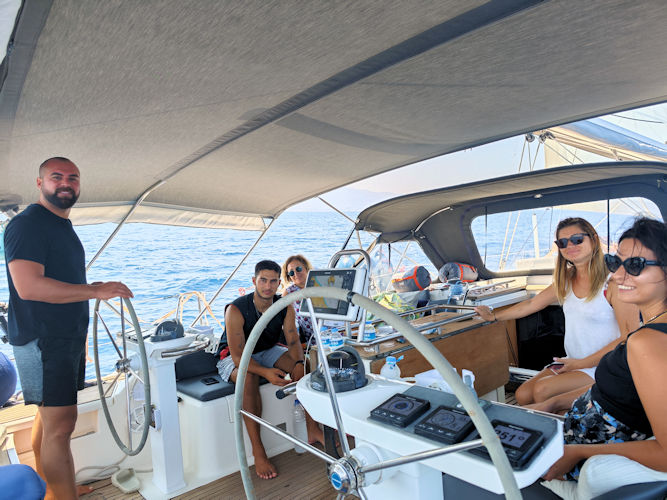
Holding only the ICC carries a real risk, though. On its IYT ICC requirements page, IYT Worldwide warns that some customers have had their charters cancelled because they held only an ICC. IYT recommends holding Flotilla Skipper or higher alongside it.
That is why I encourage every student to hold both certificates. The skipper certificate shows what you were trained to do, and the ICC carries it abroad. Our IYT International Bareboat Skipper course is the skipper half of that pairing.
How to Qualify for an ICC
Qualifying for an ICC comes down to meeting the basic eligibility rules and then proving your competence. You prove it by passing an exam or by holding an acceptable certificate.
The two sections below cover who can apply and which categories you can hold. Read them together, because your category decides what you are tested on.
ICC Eligibility Requirements
Under Resolution 40, you must be at least 16 and physically and mentally fit to operate a pleasure craft, including sufficient vision and hearing. You then pass a written and practical exam, or you hold an acceptable IYT certificate.
Your nationality and residency affect which authority can issue your ICC. The RYA, for example, restricts nationals of Resolution 40 countries unless they live in the UK.
On the IYT route, holders of the IYT Flotilla Skipper certificate and above can apply. That makes Flotilla Skipper a realistic first goal if you are just starting out.
ICC Categories and Endorsements
The RYA ICC guidance states that the RYA's ICC is valid for 5 years and comes in four categories: Power, Sail, Coastal and Inland. The Inland category also requires a CEVNI test on European inland waterway rules.
IYT endorsements follow a similar logic. You can hold Sail up to 24 m with Power up to 10 m for the tender, or a PWC endorsement. A Coastal and inland waters endorsement needs a CEVNI exam.
What Happens on an ICC Sailing Course
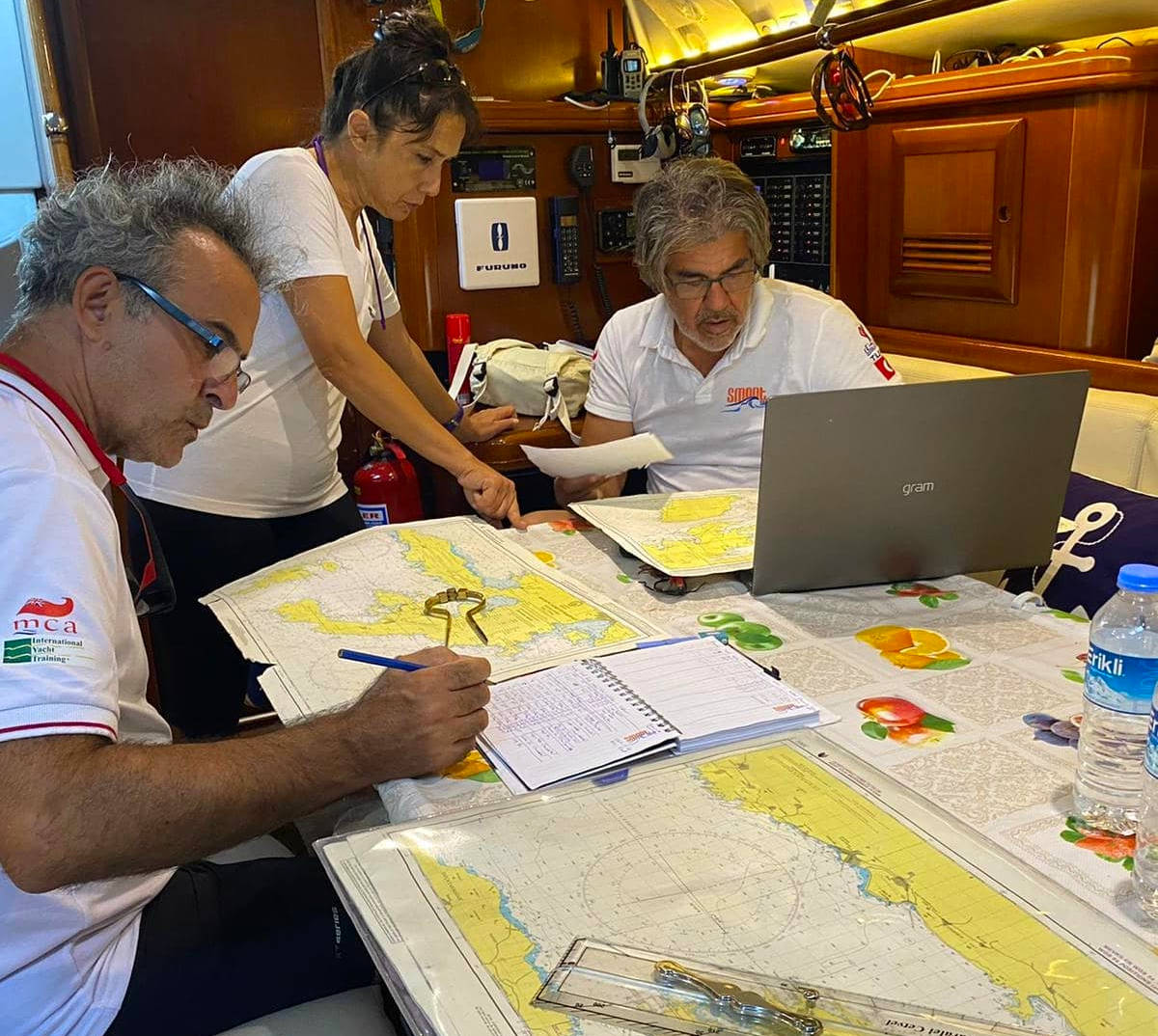
Our two-week ICC sailing course takes you to IYT Bareboat Skipper and the ICC in two weeks in the Aegean. You live aboard the whole time, studying theory each morning and then sailing to a new bay each day to put it into practice.
I have never found a better classroom than a cockpit at anchor, with morning light on the water and the chart open on the table. By the time you drop anchor that evening, the theory you read at breakfast has become something your hands remember.
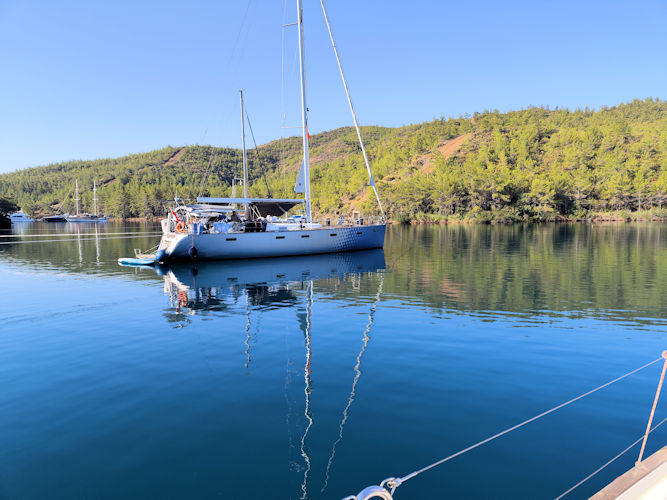
The standard IYT path runs International Crew, then Flotilla Skipper, then Bareboat Skipper. Every step is taught at sea in real Aegean cruising conditions, aboard comfortable yachts.
You also need a VHF licence before your ICC can be issued. If you do not already hold one, you can earn the IYT VHF-SRC radio licence during the course.
After your exam, we order your qualifying certificate and your ICC for you. You fly home with the sailing done and the paperwork already underway.
Courses run year-round from Marmaris, and a course runs even with one reservation. If you are travelling alone, you will not be waiting for a group to fill before you can sail. You can pick dates on our live course schedule.
Documents You Need to Apply
Once the sailing is behind you, the application is mostly a matter of gathering the right documents. Gather these early so nothing holds up your certificate. The RYA sets out the first four items and its photo rules on its RYA ICC application page, and IYT adds the fifth:
- A passport or national ID card showing your nationality.
- Proof of your residential address.
- Evidence of competence, such as your exam pass or qualifying certificate.
- A passport-style head and shoulders photo on a plain light background, with your whole face visible.
- A valid VHF certificate, which IYT requires.
The RYA also asks for the photo as a jpg or pdf under 5 MB. Check the photo before you upload it, because a rejected image only delays your application.
How Much an ICC Sailing Course Costs
All figures below come from our sailing course price list. They are summer-season (April–October) prices, per person.
| Course or fee | Price per person |
|---|---|
| IYT Bareboat Skipper, intensive 2 weeks | €2,600 |
| IYT Bareboat Skipper, 1 week | €1,500 |
| IYT Flotilla Skipper | €1,300 |
| IYT VHF licence | €200 |
| ICC certificate fee | €185 |
As an example, the intensive two-week course plus the ICC fee comes to €2,785 per person. Add €200 if you also need the VHF licence.
The course price includes your education and materials, the IYT certificate, accommodation on the yacht, marina fees, fuel, the transit log, water and electricity. We keep a single, all-inclusive price with no hidden costs, so you know what you are paying before you arrive.
If you apply through the RYA instead, the RYA issues the ICC free of charge to existing RYA members. Either way, the ICC sits on top of the skipper training you complete first.
Validity and Renewal
Both the RYA and IYT issue the ICC for five years. The RYA lets you renew up to three months before your certificate expires.
For most MCA-approved IYT documents, renewal is due five years from issue, and our school can handle the paperwork for you. Put the expiry date in your calendar now, and the next five years can stay focused on the water.
Next Steps: Planning Your First Charter
A bareboat charter needs a valid skipper licence and enough experience to handle the yacht. If you are not there yet, our charter page lists a certified skipper at €800 per week. You can still sail while you build experience.
Before you book, ask your charter company in writing which certificates it accepts for the country you plan to sail. Keep the reply with your boat papers.

For a first cruising ground, I would choose the Aegean you trained in. You already know the bays and how the yacht behaves there, and our bareboat sailboat charter options let you return as the skipper.
There is a quiet moment on every first charter when you realise nobody will tell you where to go next. Make your own route and choose your own stops. Why wait?
FAQs
These are questions students often ask before booking an ICC sailing course. Each answer is short, and the sections above have the detail.
What is the ICC sailing certificate used for?
The ICC is evidence of competence for operating pleasure craft abroad, mainly in Mediterranean waters. It comes from UNECE Resolution 40, and each visited country decides whether to accept it.
What are the eligibility requirements for an ICC?
You must be 16 or older and physically and mentally fit to operate a pleasure craft. You also pass a written and practical exam or hold an acceptable certificate, such as IYT Flotilla Skipper or above.
Which countries require an ICC for bareboat chartering?
It varies by country and by charter company, and RYA guidance for UK-flagged boats is a useful starting point. Always confirm with your charter company in writing before you book.
How much does an ICC sailing course cost?
At Smart Sailing Academy, the intensive two-week IYT Bareboat Skipper course is €2,600 per person and the ICC certificate fee is €185 per person. Both are summer-season (April–October) prices.
How long is an ICC valid?
An ICC is valid for five years. The RYA lets you renew up to three months before it expires.
How long does an ICC application take?
When you train with an IYT school, the school orders your qualifying certificate and ICC after the exam, so you do not need to apply separately. For RYA timescales, check the RYA application page.
Ready to Earn Your ICC?
Choose your dates and take the skipper course and ICC together in two weeks in the Aegean.