


What Is Sailing Safety Training?
Sailing safety training teaches you how to prevent emergencies at sea and how to handle them calmly when they happen. It covers crew overboard recovery, life jacket use, emergency radio calls, fire, first aid and equipment failures, and it usually leads to a recognised certificate. You can take it as a standalone sailing safety course, online or in a classroom, or within a hands-on sailing course.
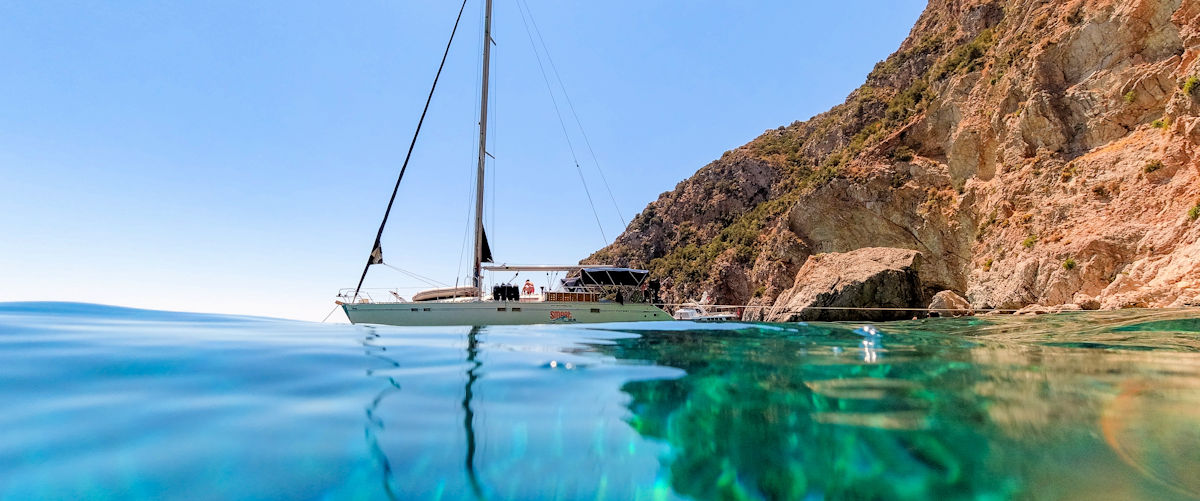
At Smart Sailing Academy, we treat safety as part of every sailing lesson. Operating a boat means learning to safely dock, depart, anchor and rescue people from the water. We practise these skills every day of our liveaboard sailing training in Turkey.
"Learning and applying safety precautions, adhering to maritime rules, monitoring weather conditions, and handling emergencies can only be learned through hands-on experience."
That is why every skill in this guide is practised at sea.
Why Safety Training Matters at Sea
At sea, help can be a long way off. A small problem, such as a leak or a rope wrapped around the propeller, can grow quickly when the nearest harbour is hours away. Our onboard FAQ reminds every guest: "You could be miles away from the nearest land or medical facility when you have a crisis."
The numbers point the same way. According to the US Coast Guard 2024 statistics, US recreational boating deaths fell 1.4% to 556 in 2024, from 564 in 2023. The US Coast Guard also reports that roughly 70% of those 2024 deaths occurred on boats whose operator had no boating safety instruction.
Read the figures carefully: that figure covers every type of US recreational boat, and it shows an association that cannot prove training alone prevents deaths. Even so, the US Coast Guard recommends both wearing a life jacket and taking a boating safety course.
On a global scale, the World Health Organization reports around 300,000 drowning deaths a year in its WHO drowning fact sheet. The WHO figure includes every cause of drowning and is not specific to sailing. Still, it is a reminder that water deserves respect. The good news is that training turns that respect into calm confidence, because you know exactly what to do when something goes wrong.
What a Sailing Safety Course Covers
The core syllabus looks similar wherever you train. For offshore racing only, World Sailing's rules require trained crew. Its draft (study version) training syllabus lists topics such as fire fighting, crew overboard recovery, cold shock and drowning, emergency communications and liferafts. Below, we describe each skill the way you practise it aboard our yachts.
Crew Overboard Recovery
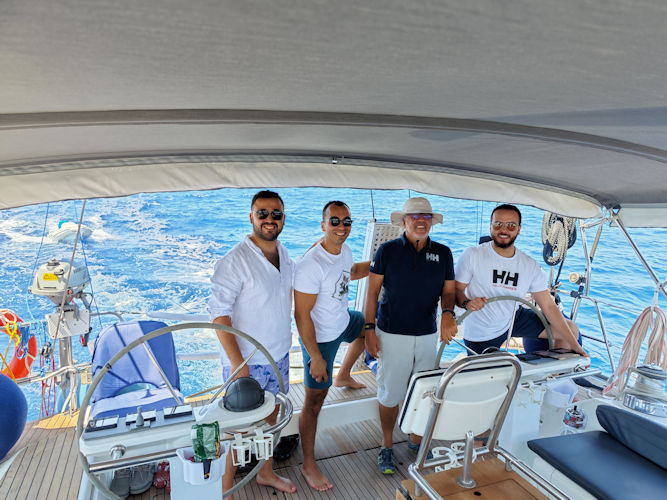
Every guest on our yachts learns the same drill. If someone falls in, shout "MAN OVERBOARD" as loudly as you can. Then throw them something that floats, and keep them in sight at all times.
If you are the one in the water, the rule may surprise you: don't swim towards the yacht. Swim to the life jacket or life sling thrown to you, and stay near the spot where you fell in. Above all, try not to panic.
Being a good swimmer is no guarantee in cold water. The Royal Yachting Association's RYA cold water shock guidance says strong swimming ability has no impact on your body's response to cold water shock. The RYA adds that the danger is real in water below 15°C, so it matters most when you sail in cooler seas.
Life Jackets and Personal Safety Gear
On your first day aboard, we show you where every life jacket is stowed and how to put it on. You wear it whenever the captain says so, especially in rough weather and at night.
The US Coast Guard advises choosing an approved life jacket in the right size and keeping it in good, serviceable condition. If you use an inflatable jacket, check that the gas cylinder is full and the service indicators show green before you sail.
The National Safe Boating Council facts page shows that 87% of US recreational boating drowning victims were not wearing a life jacket in 2024. That figure, drawn from US Coast Guard data, counts only cases where the cause of death was known.
The RNLI, the lifeboat charity for the UK and Ireland, makes a similar case for colder waters. Its RNLI lifejacket guide says a lifejacket can increase your survival chances by up to four times if you're immersed in cold water.
Emergency Communications
When something goes wrong far from shore, the radio is your link to help. Our IYT VHF radio course teaches how onboard and handheld radios, EPIRBs, SARTs, AIS and DSC radios are used.
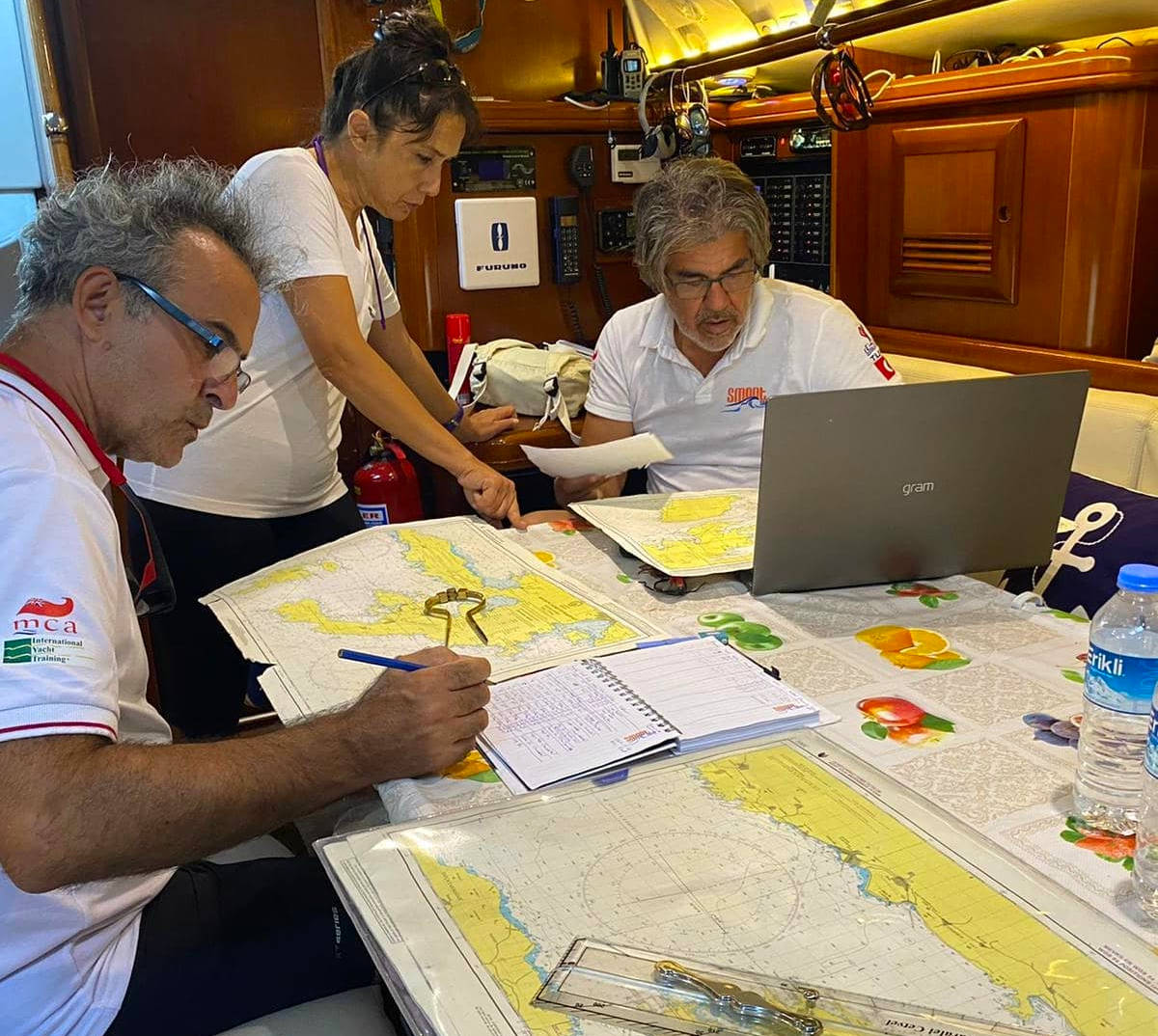
An EPIRB is an emergency beacon that sends your position to rescuers, and a SART helps rescue vessels find you on radar. AIS shows nearby ships, and DSC lets your VHF send a distress alert at the press of a button. If you plan to skipper a yacht yourself, you need a VHF licence, so this course pairs naturally with your sailing training.
Fire, First Aid and Systems Failures
Fire safety starts with knowing where the fire extinguishers are, so learn their locations as soon as you come aboard. Smoking is never allowed inside the yacht because of battery gases.
Before the trip, tell the captain about any chronic conditions or allergies you have. Far from a medical facility, that knowledge lets the crew help you quickly. Moving around the deck, keep one hand on the yacht at all times.
You'll find the full set of onboard safety rules and FAQs on our website. Systems failures, such as a steering problem or an engine that won't start, call for the same calm habits. Docking and anchoring practice under instruction builds the boat handling you need when equipment lets you down.
For a deeper course, we run a five-day Safety at Sea special training. It covers survival at sea, personal safety and social responsibility, basic first aid and fire fighting.
Sailing Safety Certifications Compared
Each certification system answers a different need, so start with where and how you plan to sail. A sea safety course for an offshore racer looks very different from a first certificate for someone who dreams of chartering in the Greek Islands.
The table below compares four common options. We mention ASA and US Sailing for comparison only, based on their published course details.
| Certificate | Issuing body and recognition | Format and length | Prerequisites | Best suited to |
|---|---|---|---|---|
| IYT International Crew | IYT, with an MCA-approved certificate recognised in over 40 countries | One week living aboard and sailing at sea | No sailing experience needed | Sailors planning to skipper or charter abroad |
| ASA 101 Keelboat Sailing 1 | ASA, United States | Beginner keelboat course, usually two days | None | Beginners learning in the US |
| US Sailing Coastal Safety at Sea | US Sailing, United States | Online, five units of about one hour each for novices, pass score of 70 | None | Safety theory studied at home |
| World Sailing Offshore Personal Survival | World Sailing standard, taught by approved providers | About two days in the UK (format varies by country), certificate typically valid for five years | Check with your provider | Offshore racing crews |
If you want to charter internationally, the IYT path is the natural choice. Our IYT International Crew course is the entry point and the prerequisite for Flotilla Skipper and Bareboat Skipper.
From there, you can explore the full list of IYT courses to see where each step leads. For offshore racing crews, World Sailing publishes guidance on personal survival training, and each certificate is typically valid for five years. Approved providers run that course, and it sits outside our IYT programme.
Online vs. On-the-Water Safety Training
Online learning works well for theory, such as radio procedure, safety equipment, weather basics and the rules of the road. It is also flexible, since you study at your own pace. US Sailing's online Coastal Safety at Sea course, for example, takes novices about an hour per unit.
Practical skills are different, because your hands and body need to learn them. Recovering a person from the water, moving on deck in a life jacket as the boat rolls, docking and anchoring all need real time afloat.
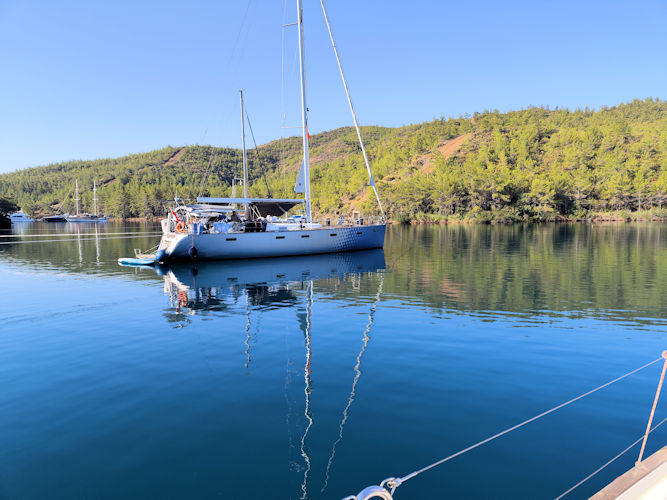
Our liveaboard model gives you both every day. You study theory each morning, then put it into practice while sailing to a new bay each day.
How Much Does Sailing Safety Training Cost?
Our sailing course price list, updated in April 2026, shows the IYT International Crew course at €1,300 per person for one week. The IYT VHF Certificate costs €200 per person, and the five-day Safety at Sea special training costs €800 per person. Every price includes accommodation in the boat, transit logs, course materials and your certificate. Food, drinks and transfers are not included, and Greek island routes add €300 per person for customs and immigration.
For comparison, US Sailing's online Coastal Safety at Sea course costs $50 for non-members and $35 for members. That buys online theory, while our International Crew price covers a full week living aboard and learning at sea. IYT regulations allow a maximum of six people per yacht on a course, so you get plenty of time with your instructor.
Next Steps After Your First Safety Certificate
Your first safety certificate is a beginning. The standard IYT path has three one-week steps: International Crew, then Flotilla Skipper, then Bareboat Skipper. If you have the time and energy, you can complete Bareboat Skipper in 14 days of intensive training instead.
Holders of the IYT Bareboat Skipper certificate can obtain the ICC, subject to UNECE Resolution 40. After that, the Yachtmaster Coastal and Yachtmaster Offshore courses take your skills further offshore.
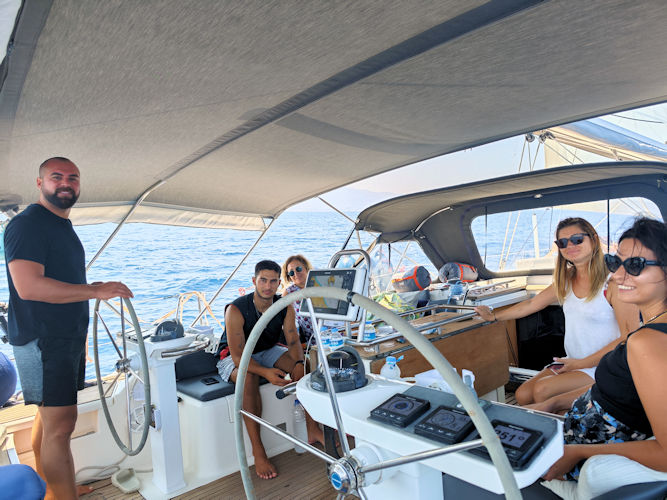
Most MCA-approved IYT documents renew five years from the date of issue, and we can handle the paperwork for you. After 14 years in business, many of our students return year after year to continue from the level they reached. We would love to welcome you aboard, so pick your course and let the Aegean teach you the rest!
Frequently Asked Questions
These are the questions we hear most often from beginners before their first sailing safety course. If yours isn't here, our team is happy to help.
What is the best way to learn sailing safely?
Combine theory study with hands-on, certified training at sea under a qualified instructor. A liveaboard course lets you learn the theory in the morning and practise it on the water the same day.
Do I need experience to take a sailing safety course?
No, you don't need any sailing experience. IYT International Crew and most entry-level safety courses have no sailing prerequisites.
Can I complete sailing safety training entirely online?
You can study theory online, and some certificates are issued after online courses. Practical skills such as crew overboard recovery still need practice on the water.
What type of life jacket should I wear while sailing?
Wear an approved life jacket that fits you properly and that you'll actually keep on. The US Coast Guard notes that inflatable jackets need regular checks and are not recommended for weak swimmers.
How long is a sailing safety certificate valid?
Most MCA-approved IYT documents renew five years from issue, and we can handle the renewal paperwork for you. World Sailing offshore personal survival certificates are typically valid for five years.
Ready to Learn Safety the Practical Way?
Pick your dates on the live schedule and start building safe habits from your first morning aboard.